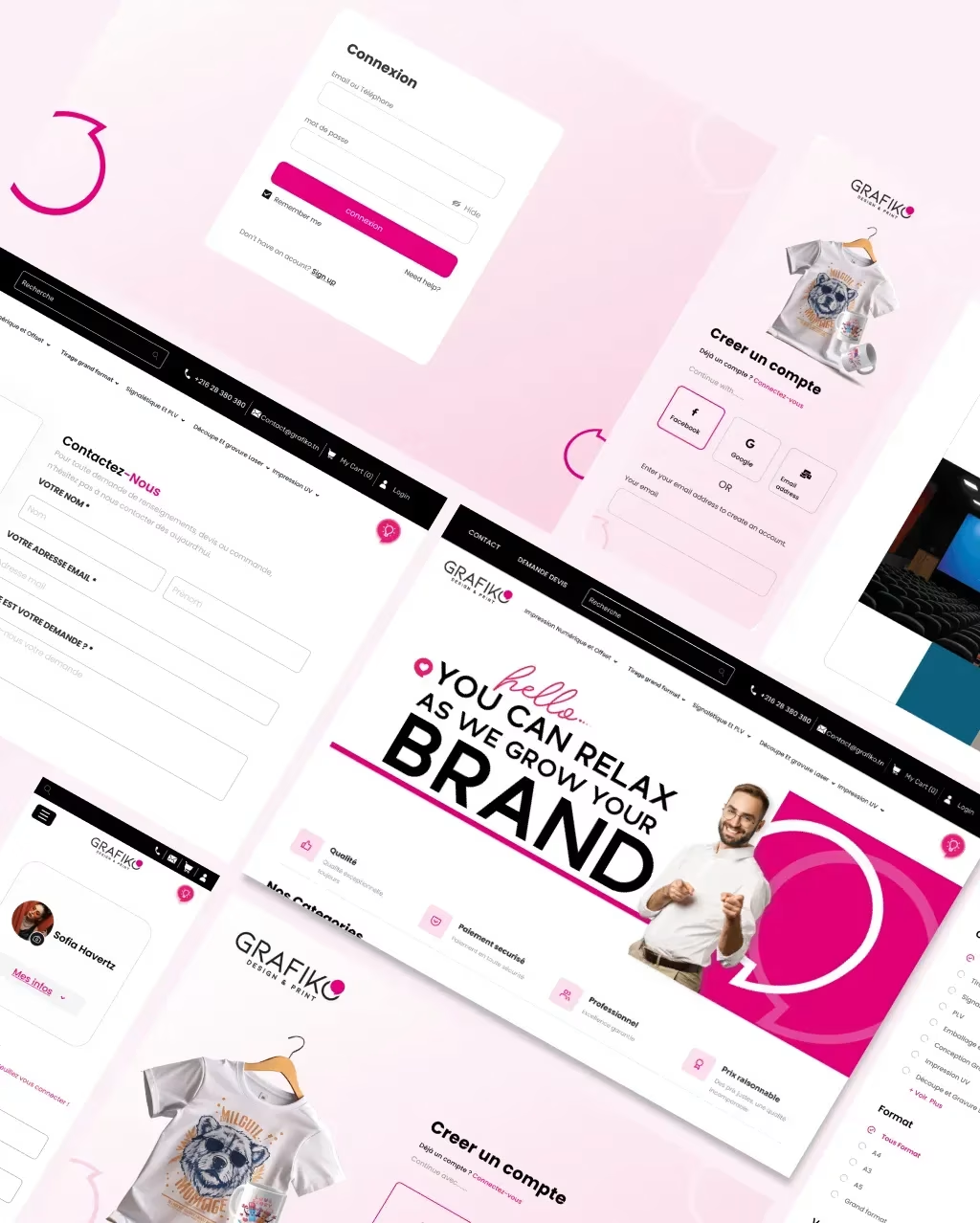
Good interface design looks inevitable after the fact — as if the screens could not have been any other way. Getting there is a process, not a leap. Here is the one we use, from first workshop to final handoff.
We start with the boring questions that save months: who uses this, on which device, to do what, and what must they never have to think about? The answers become the journeys every later screen has to serve.
Wireframes settle structure while change is still cheap. Once the structure holds, we build the design system — typography, color, spacing, components — so every screen speaks the same language. It is the difference between a page that looks designed and a product that feels designed.
A clickable prototype catches what static mockups hide: awkward flows, dead ends, labels that only make sense to us. After real clicks and fixes, developers receive a system — not a pile of pictures — which is how projects like Grafiko go from concept to a coherent, buildable interface. Want the same process on your product? That conversation is the first step.

